

What a year it’s been for No Coal No Gas - The end of the coal plant’s life is near and our work to transition it to clean energy is ramping up. Read on about the awesome work our friends have done this year.
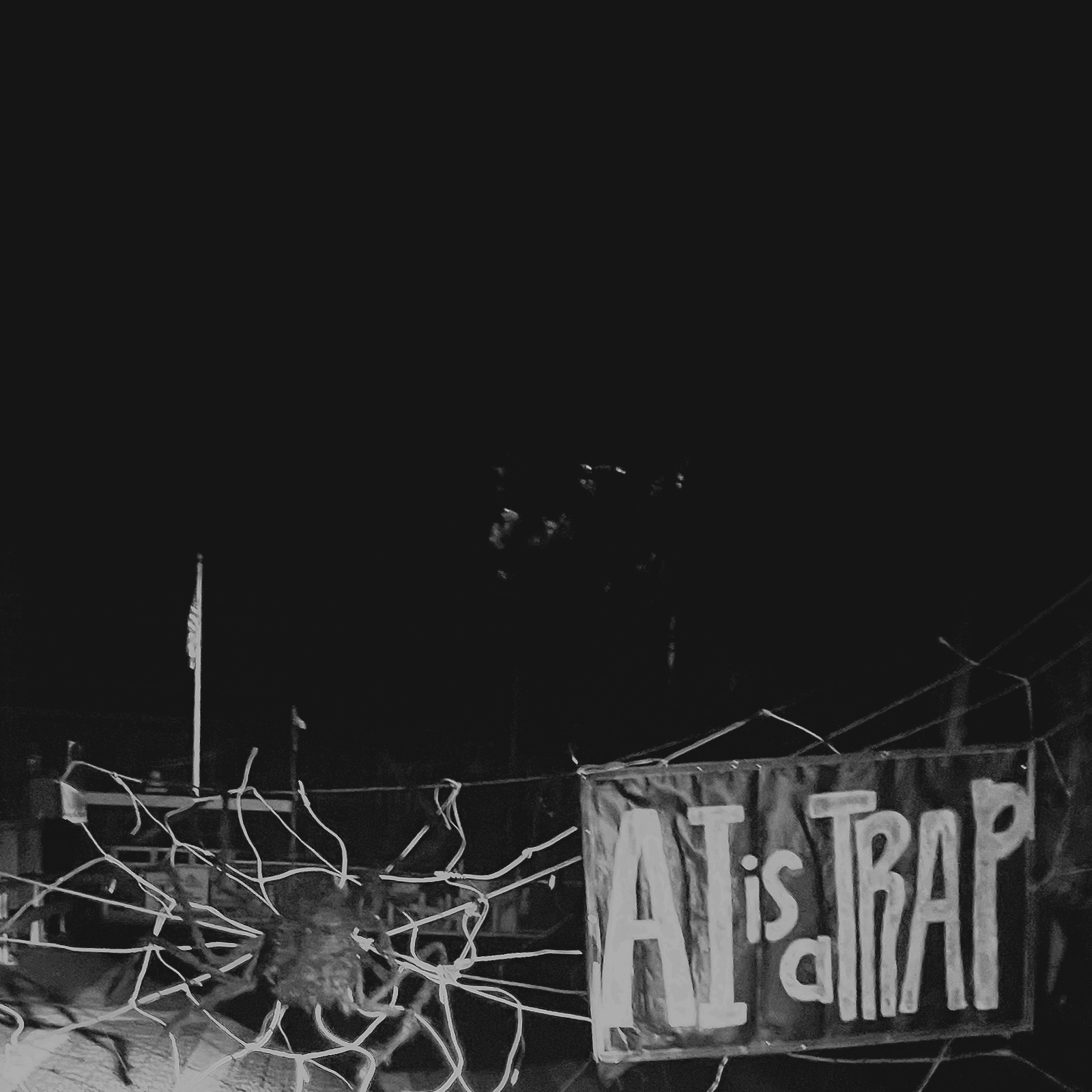
Activists with the No Coal No Gas campaign blocked the entrance to Devon Station to raise the alarm that nine Connecticut power plants are pending takeover by AI-focused companies which are building hyperscale data centers across the country. They installed a spiderweb woven of old electrical cables across the bridge at the oil-burning plant’s entrance, decked with banners reading "AI is a trap" and "data centers = bridge to nowhere." Multiple vehicles were safely halted by the web.
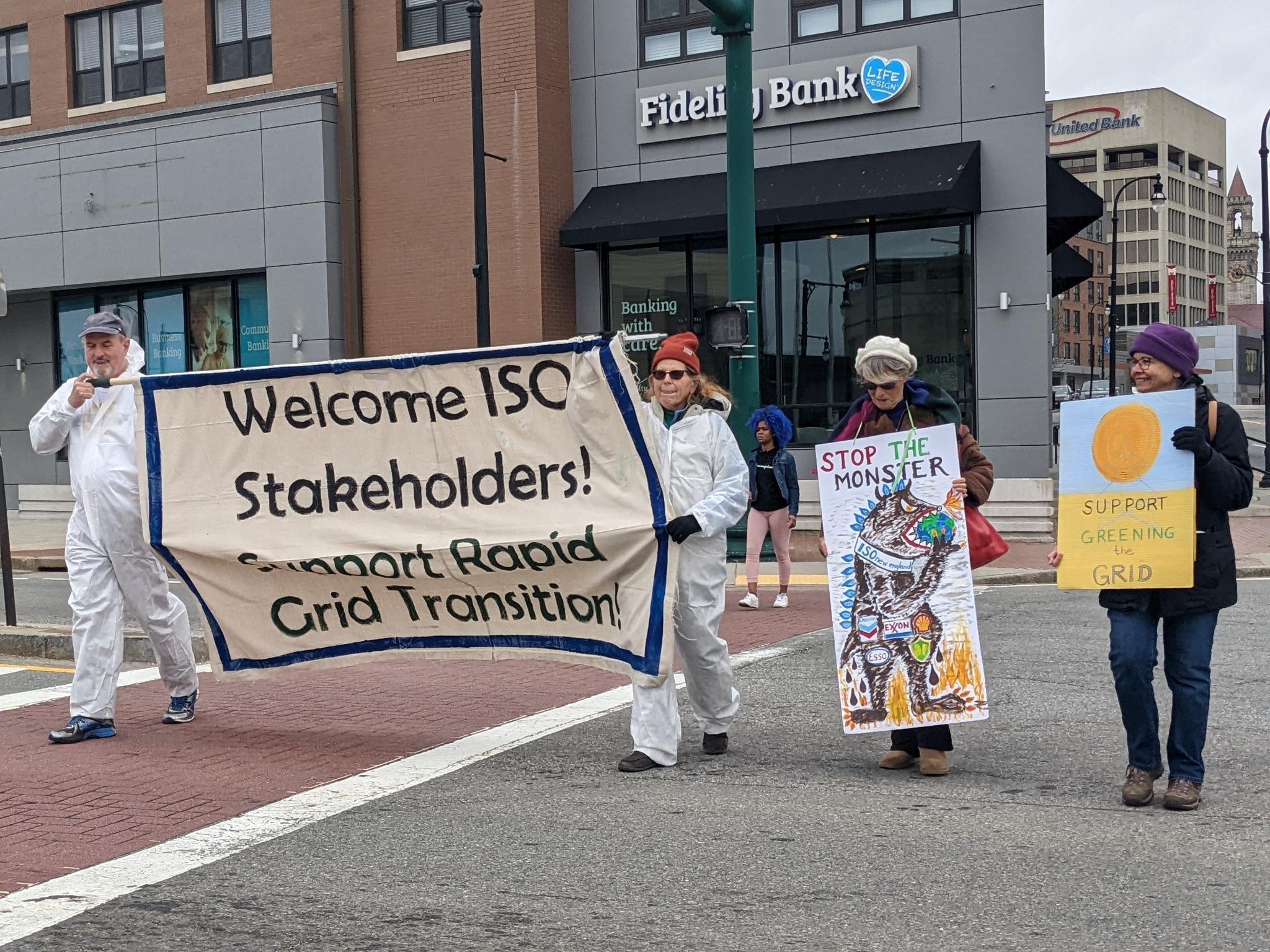
No Coal No Gas and our friends from across New England submitted hundreds of comments opposing ISO New England’s FCA 17 results. ISO-NE (Independent systems operator - New England) and FERC (federal energy regulatory commission) continue to claim our objections to fossil fuel subsidies on the grounds of negative climate impacts are “beyond the scope” of this proceeding - but that doesn’t deter us. We will continue to put pressure on ISO and FERC until we stop burning coal and gas in this region. Below are some of the highlights from No Coal No Gas’s official filings to FERC and letters to the office of public participation.
The No Coal No Gas Campaign has shown since its start that dirty fossil fuel peaker plants like Merrimack Station in Bow, NH, are not only unnecessary for grid reliability, but actually threaten grid reliability by ignoring how fossil generators, by damaging climate, increase risks of extreme events…
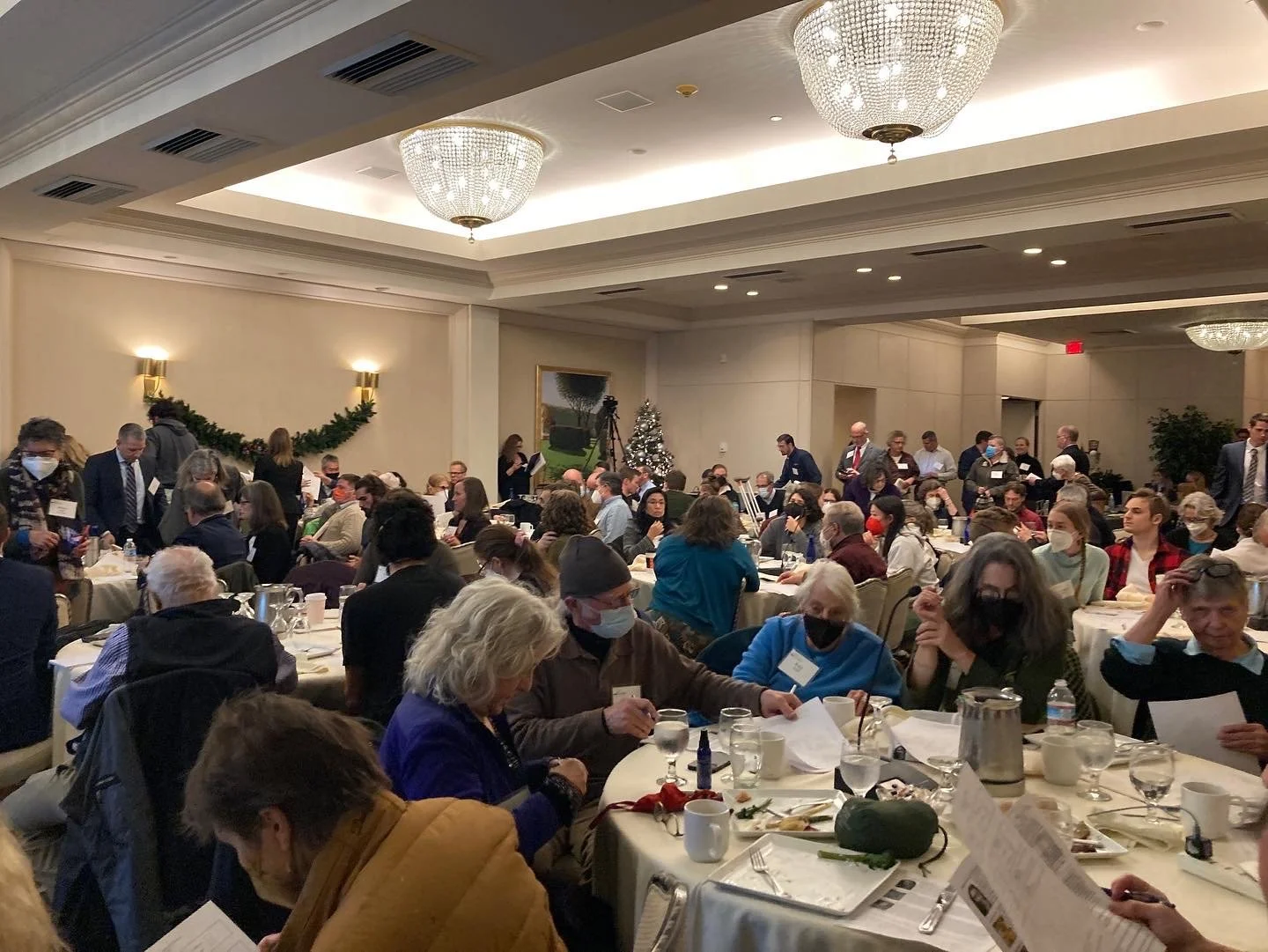
On Wednesday, No Coal No Gas activists elected a slate of climate activists and allies to the Coordinating Committee of the Consumer Liaison Group (CLGCC) of the regional grid operator, ISO New England (ISO-NE). A record number of attendees were present in-person and online to vote for grassroots climate justice activists, ratepayer advocates as well as representatives from an environmental policy nonprofit organization and an energy advisory company whose work supports businesses to meet their sustainability goals.
No Coal No Gas activists published a parody press release, as well as a spoof website, announcing a delist bid for Merrimack Station in Bow, NH. The move was designed to pressure Granite Shore Power, owner of New England’s last coal-fired power plant, to comment on their plans for the future of the generator. Out of respect for reporters, the activists posted their satirical statement only through Utility Dive’s pay-to-publish press release feed, which publishes immediately upon submission and is reviewed retroactively. Activists hope to use this spoof to unmask the harms that Merrimack Station and its corporate owners create in the surrounding community and reveal what future accountability could look like.
Some thoughts from No Coal No Gas Community members Leif Taranta and Julie Macuga in response to their recent court hearing.
On July 12, we attended court in Concord, NH for a plea hearing. This hearing was a result of our January 8th action, when we were charged with trespass and disorderly conduct for climbing and chaining ourselves to the smokestack of Merrimack Station. You can watch a video recap of our action here!

Make it stand out
We had been offered a plea deal by the prosecution of a $1000 fine each, with a $250 penalty assessment and an additional $200 each suspended for two years. We were daunted by the prospect of giving this much money to an incredibly unjust legal system, especially since we do not have a ton of money! We also hoped to resolve our cases quickly given that we have multiple open cases and expected even worse sentences were we to go to trial. We also didn’t want to be subject to bail conditions for years, as they make organizing increasingly difficult.
In the end, we decided that we would try to use our situation to raise money to support other folks facing the criminal legal system, as well. We were inspired to do this because of an interaction we had at our previous hearing, when we met the lawyer of a man who was stuck in jail for 3 days because of an awful miscommunication over $115 that he was having trouble paying for a violation of bail conditions that had since been deemed unnecessary. We listened to the absurdity of this situation, and then we got the $115 from campaign resources! One of our court supporters drove to the jail, bailed him out, and helped him get a taxi home. This was one happy outcome after witnessing so much brutality in the courts. So many times over the past years, we’ve felt outraged and powerless watching the criminal legal system destroy people’s lives. We’ve watched prosecutors make fun of defendants who were struggling with addiction, witnessed single mothers forced to haggle with a judge over which day they would report to jail based on a lack of childcare, seen friends held in custody for months without a trial or sentencing. And on top of all this classism, we’ve had judge after “progressive” judge imply that we are somehow “better criminals”- by saying things like “you all aren’t like everyone else I see in court.”
It’s true that we aren’t like most other people in the courthouse. Unlike most people in the criminal legal system, we had made a plan that involved getting arrested, and we were supported in that. We have a degree of privilege where we made the conscious choice to engage with this system, while so many people wake up with the police at their door through no fault of their own. So it’s true that we have a different story from most people we meet in court, but the idea that we are the “good, righteous criminals” while everyone else is a “bad criminal” is absurd. The real “crime” here is the injustice system itself—a system that keeps people trapped away from their families as a punishment for poverty, for addiction, for miscommunications. The two of us believe there should be no such thing as police, no such thing as courts as we know them, and no such thing as fines or jail.
We decided to take a plea deal so we could focus on other organizing that feels more meaningful to us than engaging with this particular case in this particular system. We knew that even though we couldn’t afford to pay our fines ourselves, our community would have our backs. But we also wanted to be able to share the resources we have access to! That’s why we fundraised for our court fees with a commitment to donate 20% of what we received (plus any extra) to the NH Bail Fund, which “frees people who are stuck in jail before being tried for any crime.” We hope in the future that we will be able to share more, but that’s part of what mutual aid is—meeting our needs now enough so that we can share with others both now and into the future.
After a lot of fundraising help from friends and No Coal No Gas, we raised $3002 overall! This generous support means that we were able to send $601 to the bail fund. If you are reading this and would like to donate more to support their work, please do! You can donate directly here.
Even though we took a plea deal for our trespassing charges, we wanted to make it clear to the court that we don’t feel guilty about our actions. With help from our amazing movement lawyer, Dan Donaddio, we were able to negotiate for a “no contest plea.” We also decided to use our allocutions to tell the court what we really think. Julie spoke about hearing judges and prosecutors continually insist we use the so-called proper channels: “Write to your legislator. Vote. Write public comments. Start a petition.” She recalled her extensive experience using the “proper channels” and how their failure led her to direct action. Leif used their statement to challenge the court’s conception of justice, pointing out the judge and prosecutor’s complicity in deciding to prosecute poor people and nonviolent activists over the very real harms of the Merrimack Generating Station. If you’d like, you can watch our allocutions below.
In the end, we are so grateful for everyone’s support both in our original action and throughout the court process. We want to encourage everyone to continue to support the NH bail fund, as well as local police and prison abolitionist work! Thank you so much!
-Leif and Julie
The ISO working group of No Coal No Gas has been busy, and we’d like to share our latest update.
But first, JARGON ALERT! This list should help you navigate the acronyms:
The New England electrical grid is managed by an entity called the "Independent Systems Operator - New England, " which you'll usually see written as ISO-NE or ISO. There are other ISOs in some other regions of the country.
FERC is the Federal Energy Regulatory Commission and has regulatory/oversight responsibilities for ISO-NE (this means ISO-NE has to run big decisions past FERC). When we ask you to submit a comment, we’re usually asking you to send it to FERC.
In 1971, the New England Power Pool (NEPOOL) was formed to coordinate transmission planning and to achieve economic and reliability benefits through coordinated regional electrical grid management. This means that NEPOOL was actually the predecessor to ISO-NE.
In 2005, after FERC encouraged the creation of Regional Transmission Organizations (RTOs) to formally manage electrical grid operations/markets in multi-state areas, NEPOOL members, state officials and ISO-NE (which was a new organization at the time), turned over control of the regional grid management and market rules to ISO-NE.
Also in 2005: when FERC approved the establishment of ISO-NE as the official RTO for the region, FERC ALSO established NEPOOL as the official independent stakeholder advisory group of ISO-NE. This means that NEPOOL has standing at FERC, and if NEPOOL challenges ISO-NE's decisions, FERC considers the two positions as holding equal weight. We're told this is called the "jump ball" provision. In this way, NEPOOL has quite a bit of power to pressure ISO-NE to make better choices.
NEPOOL has over 500 member groups. As you'd expect, the cast of characters is heavily weighted toward legacy fossil fuel generators, enormous utility companies, and other industry groups that aren't committed to climate justice or energy justice. But consumer advocates, progressive research groups, and other advocacy groups, along with more and more companies trying to push the transition to renewables, efficiency, and storage are also represented.
It costs $500/year to join NEPOOL, and we aren't sure that our best position is within that system, but the No Coal No Gas ISO working group continues to build relationships with NEPOOL advisors and members. These relationships are helping us get access to and analysis of information about how the regional electrical grid is structured (in terms of markets and governance). All of this learning informs our strategic choices about how to move forward in this branch of the campaign.
Your ratepayer dollars fund NEPOOL. This year’s NEPOOL budget is over $3.5 million. You can read more about NEPOOL at nepool.com
With all of that background in mind, here's our latest update:
A number of officials with whom we've been in dialogue encouraged us to submit a comment to NEPOOL in advance of their summer meeting. We were assured that although we are not NEPOOL members, there is genuine interest among those members in what groups like ours have to say. NEPOOL and ISO-NE are at a sort of crossroads – a moment when they are pressed to make some decisions about the future of the regional electrical grid's market structure, which is currently based on market mechanisms in large part.
We had a lot to say, but we decided to narrow our comments in hopes of getting some focused response. We've received a few private messages encouraging us to continue to push, but there has been no official NEPOOL recognition that we even submitted a comment. We'll keep you posted.

June 20, 2022
RE: Pathways Study
By electronic mail: David Cavanaugh, NEPOOL Chair (dcavanaugh@ene.org); Christina Belew, NEPOOL Vice Chair (christina.belew@state.ma.us), Sebastian Lombardi, NEPOOL Counsel (slombardi@daypitney.com), Heather Hunt, NESCOE Executive Director (heatherhunt@nescoe.com), Eric Johnson, ISO Director of External Affairs (ejohnson@iso-ne.com)
The No Coal No Gas campaign (NCNG) appreciates the opportunity to share feedback about the Future Grid Pathways study with NEPOOL. We also appreciate the detailed feedback and questions already submitted by a number of NEPOOL member organizations about the Pathways study.
As a regional grassroots climate justice advocacy group representing over 1600 New England ratepayers, we feel a deep sense of urgency regarding the impacts of climate change on every aspect of our lives. Our feedback reflects the concerns of scores of other grassroots groups across the region who technically qualify as end-user groups, but lack the resources and capacity to join NEPOOL. Although we are not experts in generation, transmission, or market design, over the past several years we have worked to develop our understanding of the basic questions, challenges, and choices before ISO-NE, the states, and NEPOOL members.
We have come to appreciate the complexity of modeling potential pathways, and we believe that the Analysis Group has produced a report that achieves the task that was given to them. We have several concerns we want to raise for your consideration.
The phrase “climate change” is used only once, in the first sentence of the study (and the word “crisis” is never used). Although carbon pricing and decarbonization targets are addressed throughout, the realities of the climate crisis are not mentioned. The omission of an honest, factual description of the context driving this study, and the absence of any data about climate impacts and their social costs, tends to encourage readers to accept a slow, business-as-usual approach to grid management and transition pathways.
We have been told that 2030 would be an ambitious timeline for implementing any future grid pathway. We understand there are many complex factors contributing to a process that moves forward on “regulatory time.” However, the urgency of these times demands that we find ways to move beyond such constraints in order to act more quickly.
Now that the Future Pathways Study has been finalized and released, we are particularly concerned about how NEPOOL, the ISO and NESCOE will proceed with making a decision about which pathway to pursue. So far, our inquiries have left us confused and concerned about the decision-making process. The complexities of the ISO governance and accountability systems are difficult to understand. We want to know specifically how decision-making about grid transition will move forward.
We understand that the New England States will need to engage in consensus-building in order to select a pathway for regional grid transition. And we want to understand how that process will move forward.
We are asking for transparency and accountability in these ways.
For almost three years, the No Coal No Gas campaign has been organizing to shut-down Granite Shore Power’s Merrimack Station in Bow, NH – the last remaining coal-fired power plant in the region. The climate crisis has been the context for our campaign. Therefore, we have, at times, taken action beyond the familiar, comfortable and slow business-as-usual pathways. We are asking you to remember the context of the crisis and dare to consider bold and rapid pathways.
Sincerely,
Steven Botkin, on behalf of the No Coal No Gas campaign
SDBotkin@gmail.com